
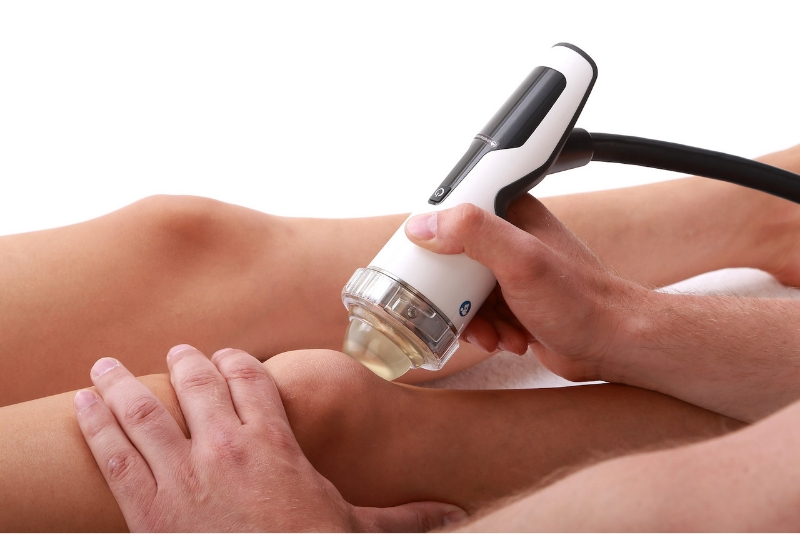
Scaphoid non-union is a difficult bone-healing problem. The scaphoid has a limited and partly retrograde blood supply, especially toward the proximal pole, so fractures can fail to consolidate even after fixation and bone grafting. In this case, healing stalled after surgery, yet consolidation followed a non-invasive regenerative protocol combining focused extracorporeal shock wave therapy (ESWT) with extracorporeal magnetotransduction therapy (EMTT).
Why Is Scaphoid Non-Union So Difficult to Heal?
Scaphoid non-union is difficult because the bone combines limited vascularity, substantial mechanical demand, and a small healing surface.
The Scaphoid Has a Vulnerable Blood Supply
Much of the scaphoid receives blood through vessels entering distally and travelling back toward the proximal pole. A fracture can therefore disrupt circulation to the area that most needs biological repair. Proximal fractures are particularly challenging because compromised perfusion can slow union.
Mechanical Stability Does Not Guarantee Biological Union
Screw fixation and bone grafting can restore alignment and provide stability, but bone still needs an active biological healing response. When that response remains weak, CT imaging may continue to show a visible non-union despite technically appropriate surgery.
That was the central problem in this case.
The Case: Persistent Non-Union After Bone Grafting and Herbert Screw Fixation
The case was reported by Dr. Severin Welter, an orthopaedics and trauma surgery specialist in Germany. The patient fell onto the hand in September 2024. CT imaging identified a scaphoid non-union, and surgery followed in December.
Surgery Addressed the Structural Problem
The procedure included resection of the non-union, placement of a corticocancellous iliac crest bone graft, and fixation with a Herbert screw.
By March 2025, however, imaging still showed persistent non-union.
Pain and Function Were Still Affected
At presentation for regenerative orthopaedic treatment, the patient reported average pain of 5 out of 10 on a visual analogue scale, resting pain of 3 out of 10, and pain with initial movement of 3 out of 10.
Symptoms affected daily life on roughly 20 days each month.
Why Combine Focused ESWT and EMTT for Bone Healing?
Focused ESWT and EMTT deliver different forms of physical energy to tissue. The clinical rationale for combining them is that they may influence overlapping but distinct biological processes involved in bone repair.
Focused ESWT Delivers Mechanical Energy to a Precise Target
Focused shockwave therapy delivers high-energy acoustic waves into a defined tissue depth. In bone-healing research, ESWT has been associated with mechanotransduction, local circulation, osteoblast activity, and signalling involving vascular endothelial growth factor (VEGF) and bone morphogenetic protein-2 (BMP-2).
Clinicians can review Vale Medical’s focused shockwave therapy platform and the STORZ DUOLITH SD1 T-TOP Ultra for focused ESWT applications.
EMTT Applies High-Frequency Magnetic Energy
Extracorporeal magnetotransduction therapy uses rapidly oscillating magnetic fields rather than acoustic shockwaves. The STORZ MAGNETOLITH EMTT system is designed for musculoskeletal applications including bone-healing research.
Laboratory studies have reported changes in osteogenic gene expression and extracellular matrix mineralization after EMTT exposure. That gives clinicians a biological rationale for investigating EMTT as an adjunct in delayed union and non-union cases.
What Treatment Protocol Was Used in This Scaphoid Case?
The case used focused ESWT and EMTT as a planned combination rather than interchangeable treatments.
Focused ESWT Targeted the Non-Union Site
The supplied case report describes focused ESWT delivered across three treatment sessions. The protocol used an energy flux density of approximately 0.35 mJ/mm² with roughly 3,500 focused shockwave pulses per session.
These parameters belong to this individual case and should not be interpreted as a universal protocol.
EMTT Extended the Regenerative Stimulation
EMTT was delivered with MAGNETOLITH at energy level 8, using approximately 6,000 pulses per session across six sessions.
The aim was to provide targeted mechanical stimulation through focused ESWT while adding repeated electromagnetic stimulation through EMTT during the healing period.
Treatment selection, energy settings, imaging guidance, contraindications, and follow-up should remain under qualified clinical supervision.
What Happened After ESWT and EMTT?
The outcome was assessed with imaging as well as pain and functional progress.
CT Imaging Showed Progressive Consolidation
Follow-up CT in August 2025 demonstrated clear partial consolidation at the previous non-union. By December, approximately 80% consolidation was reported.
For scaphoid non-union, CT follow-up is especially valuable because it can show bridging bone and progressive consolidation more clearly than symptoms alone. Pain may improve before union is complete, while persistent discomfort does not necessarily define structural failure. Imaging therefore remains an important part of deciding whether biological healing is advancing and whether the overall treatment strategy should continue or change in practice.
The Patient Became Pain-Free and Functionally Unrestricted
At later follow-up, the patient was reported to be pain-free, able to load the wrist, and unrestricted in daily activities.
It remains a case report. A successful individual outcome should generate clinical interest and further research, not be treated as proof that the same result will occur in every non-union.
What Does the Evidence Say About ESWT and EMTT?
The evidence base is stronger for focused shockwave in bone healing than it is for the ESWT-EMTT combination specifically.
Focused Shockwave Has a Bone-Healing Research Base
Clinical and experimental literature has investigated focused ESWT for delayed unions and non-unions for years. Research has reported effects involving neovascularization, osteogenic signalling, and fracture consolidation, although outcomes vary by bone, non-union type, protocol, and patient factors.
EMTT Evidence Is Growing
EMTT has a smaller but expanding evidence base. A 2024 laboratory study reported upregulation of genes associated with osteogenesis and accelerated extracellular matrix mineralization after electromagnetic transduction therapy.
Case reports have also described combined ESWT and EMTT in scaphoid, metacarpal, humeral, and calcaneal bone-healing problems.
The important distinction is evidence level: mechanistic studies and case reports support further clinical investigation, but they are not equivalent to large randomized trials.
Why This Case Matters for Regenerative Orthopaedic Practices
This case matters because persistent non-union can leave clinicians with limited options after technically adequate fixation.
Combination Therapy Expands the Regenerative Toolkit
Focused ESWT supplies precise mechanical stimulation. EMTT adds high-frequency electromagnetic stimulation without direct tissue contact.
Vale Medical also provides guidance on combining focused shockwave therapy with EMTT for practices evaluating multimodal musculoskeletal care.
Patient Selection Still Comes First
Not every non-union is primarily a biological problem. Infection, instability, hardware failure, deformity, avascular necrosis, smoking, metabolic disease, and other factors can influence healing.
Imaging, surgical history, mechanical stability, vascular status, and patient-specific risk factors should guide treatment selection. ESWT and EMTT should complement clinical reasoning, not replace it.
Bringing ESWT and EMTT Into a Bone-Healing Practice
At Vale Medical, we help orthopaedic, sports medicine, rehabilitation, and regenerative practices integrate STORZ Medical technologies with equipment selection, clinical education, training, and ongoing technical support.
When mechanical stabilization is present but biological healing remains stalled, focused ESWT and EMTT may offer complementary stimulation worth investigating.
Vale Medical supplies the DUOLITH SD1 focused shockwave platform and MAGNETOLITH EMTT, along with training and service support for clinical implementation.
One case cannot define a standard of care. It can show why precise mechanical stimulation, electromagnetic transduction, imaging follow-up, and careful patient selection deserve continued attention in difficult bone-healing cases.